



A Virtual Lifeline for Stroke Victims
OU Health's telestroke services are helping rural Oklahomans beat the clock and save lives.
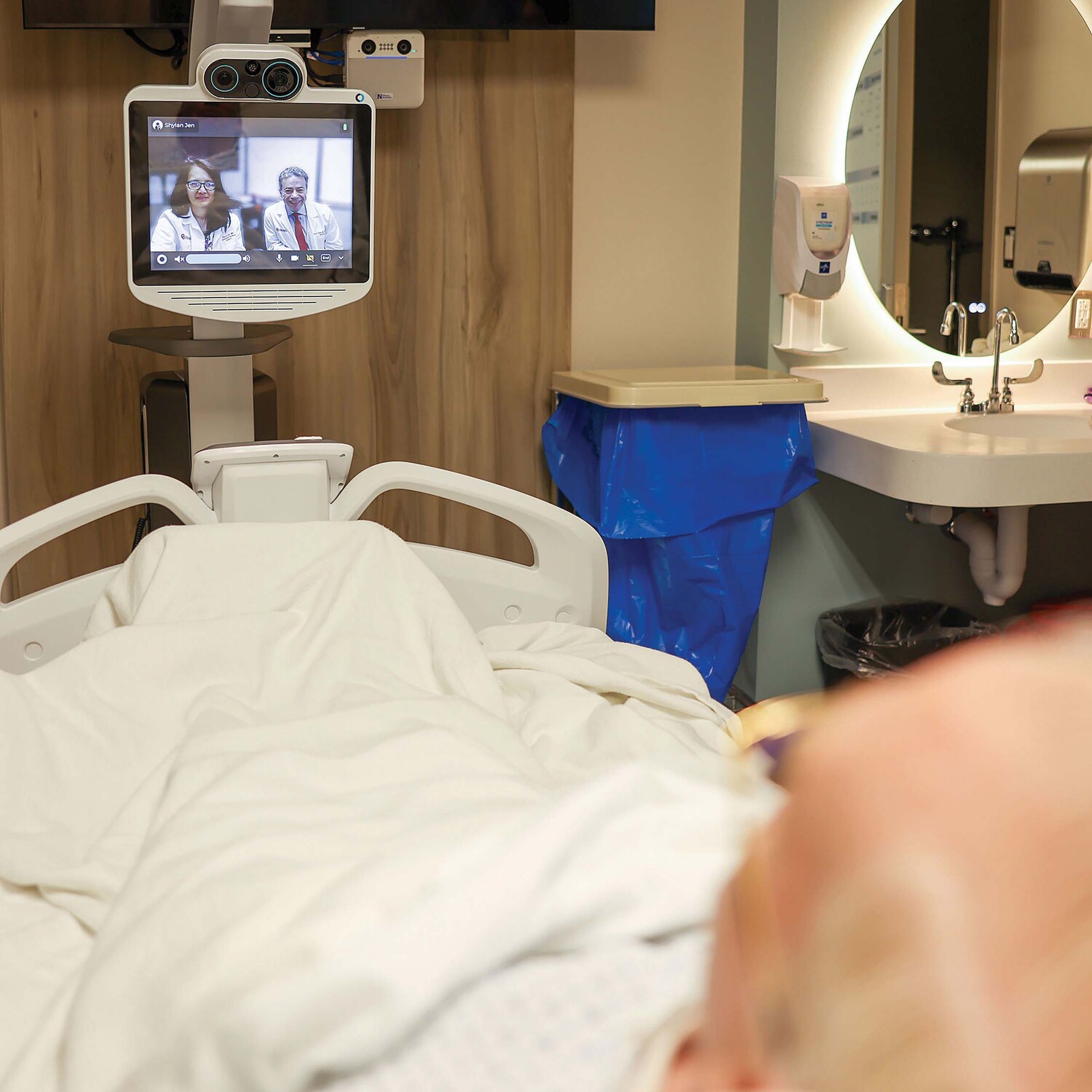
A tall, slender medical cart equipped with a computer monitor, video camera and keyboard may seem like a simple device. Yet, in early September, this specially equipped telecart likely helped save the life of Eric Roath.
Roath is a logger in southeastern Oklahoma near the Texas border. While at work, he began to notice the left side of his body going numb and a growing sense of confusion setting in. Recognizing the symptoms of a possible stroke, the 43-year-old resident of rural Bethel Township needed medical attention—fast. But the closest emergency room was at McCurtain Memorial Hospital, more than 30 minutes away in Idabel, Okla.
The Idabel emergency room medical team was alerted that Roath was en route and prepared for his arrival. With the support of OU Health’s telestroke services, an Oklahoma City-based neurologist was able to evaluate Roath and, working with the Idabel medical team, make diagnostic decisions in real time.
“We called ahead to give the hospital a heads up about what was happening, so when I got there, a doctor from OU Health was able to evaluate me virtually and recommend a clot-busting shot,” Roath says. “After that, I was airlifted to the OU Health campus in Oklahoma City, where I spent three days in an intensive care unit. The entire team from the beginning was awesome.”
Approximately 40 percent of Oklahomans reside in rural communities, characterized by low population density and typically located far from urban centers. While living in a rural community has its appeal, access to medical care is a challenge, particularly when it comes to specialized care like that for strokes. Traveling long distances in an emergency can lead to adverse outcomes for any serious condition, particularly when time is critical.
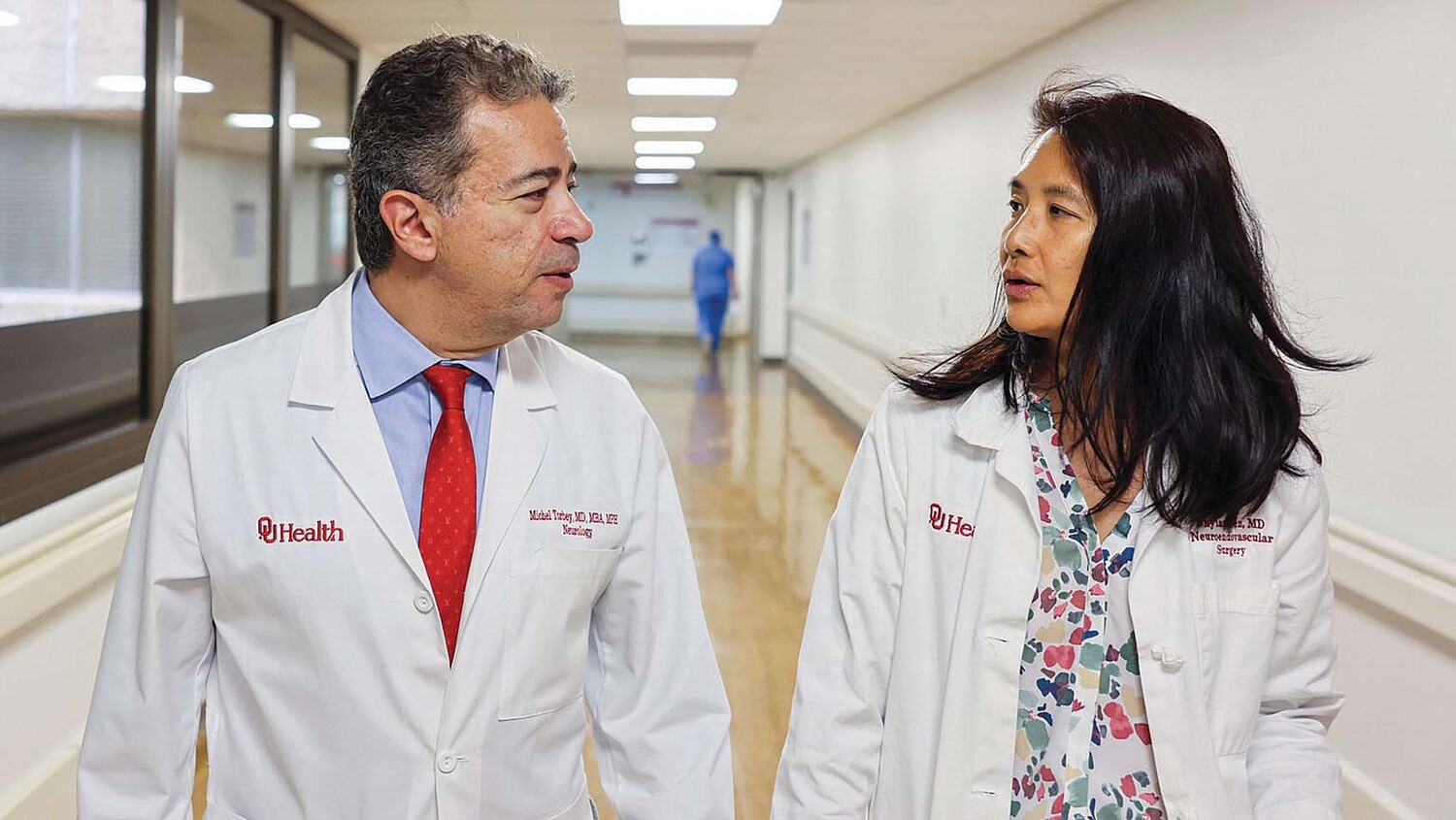
“The most important initial stroke intervention is intravenous clot-busting medication,” says Dr. Michel Torbey, chair of the University of Oklahoma College of Medicine’s Department of Neurology and clinical service chief of neurology at OU Health. “The window of time to administer a clot-dissolving drug is within four and a half hours of the onset of symptoms. Through telestroke technology, patients can receive remote specialist care at their bedside. We can do a neurological exam, review imaging and decide the best treatment in a timely way. Sometimes that involves transport and further care.”
Stroke experts at OU Health are deploying this lifesaving technology to rural hospitals around the state. From the panhandle to the southeast and from northeast to southwest, patients and medical teams will have the opportunity to utilize OU Health telestroke services when fully implemented.
Dr. Shyian Jen, an interventional neurologist with OU Health and medical director of the telestroke program, secured a nearly $1 million grant from the U.S. Department of Agriculture in 2023 that kickstarted the effort. With the grant’s help, OU Health will purchase up to 23 telehealth carts and provide 24/7 IT support.
“One thing we have heard loud and clear is the need for neurological services in rural areas,” she says. “That could be any neurologic event, whether it is a stroke or ‘stroke mimic,’ like a seizure. Telestroke services align with the university’s strategic planning to ensure health care is available to rural parts of the state.”
Jen says nearly 2,000 Oklahomans die from stroke-related complications annually, making it the state’s fifth-leading cause of death. Only two states in the nation have higher incidences of stroke and just five have more stroke hospitalizations per capita.
“The reason we care about delivering stroke evaluation and treatment near where patients live is that time is so important,” she explains. “When evaluating a patient with a stroke, we need to do it quickly. There is a short time window to administer medications to at least decrease the impact, or at best, avert a stroke altogether.”
Most rural hospitals do not have a staff neurologist, a physician specializing in disorders of the brain. When a patient arrives presenting stroke symptoms and telestroke services are available, onsite medical staff can initiate a telestroke consultation.
“Within minutes, one of our physicians is online to examine the patient,” says Torbey. “Sometimes it takes less time for us to log on than it does to walk down to our own emergency department in Oklahoma City.”
“As Oklahoma's academic health system, OU Health is uniquely positioned to expand access to advanced neurosciences care,” says Dr. Andrew Jea, the Harry Wilkins, M.D., chair at the OU College of Medicine’s Department of Neurosurgery and clinical service chief of neurosurgery at OU Health.
“We’re building out a comprehensive neurosciences program as part of the OU Health Campus and OU Health strategic plans,” he says, explaining that telestroke, teleneurology, teleneurosurgery and other specialized neurosciences services will allow more Oklahomans—especially those in rural communities—to receive timely, expert care.
“This is about bringing the full strength of academic medicine to all 77 counties and beyond.”
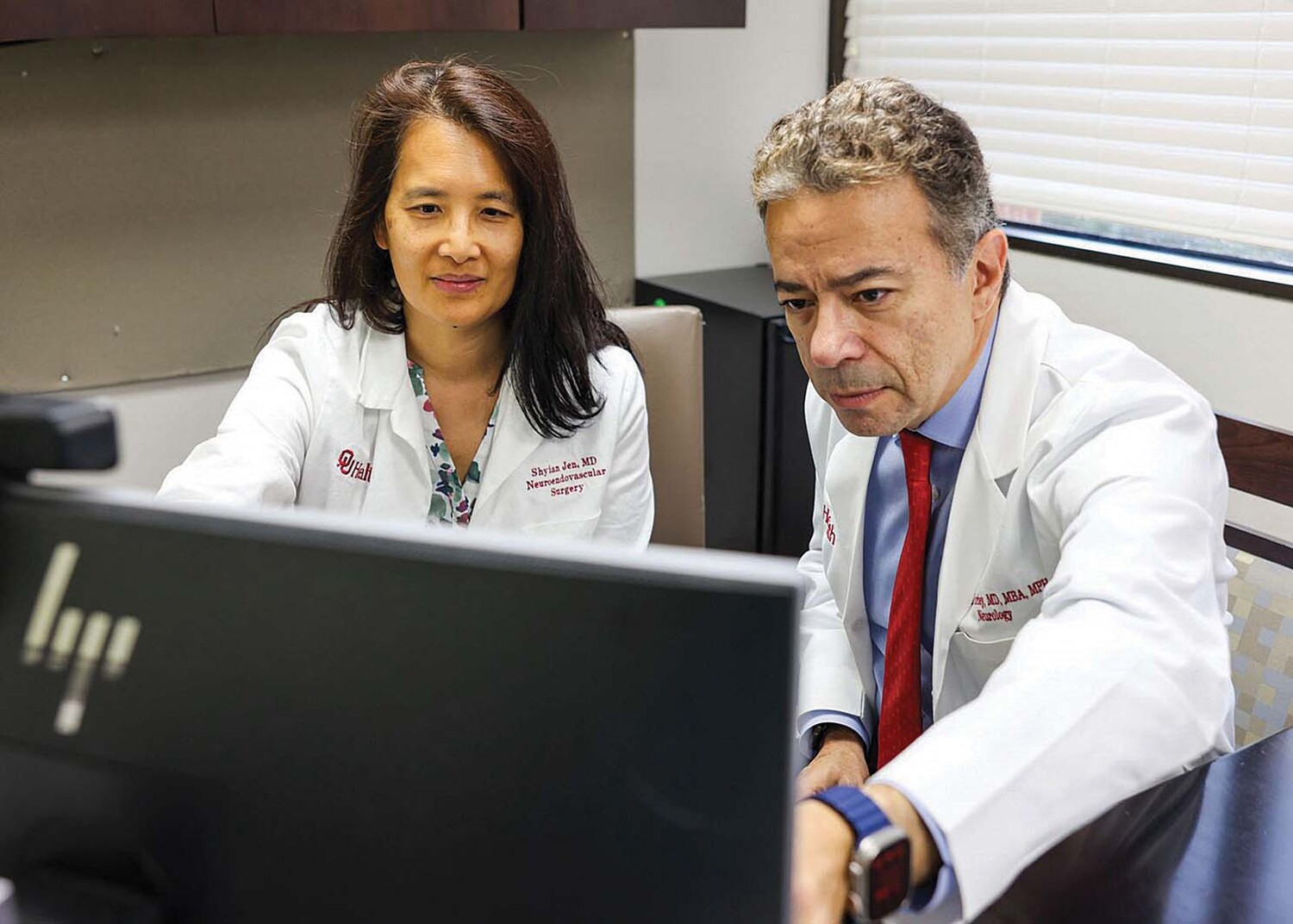
Stroke treatment has evolved over the last few decades to become faster and more responsive, and telestroke services have become an essential part of that diagnosis and treatment.
“In earlier years, if someone came in with an acute stroke, we would advise medical staff over the phone and recommend aspirin, then suggest that they let us know how the patient was doing,” Torbey adds.
Jen says that with the OU Health telestroke services team receiving an average of five calls a week, the goal is to maximize impact by strategically placing carts in parts of the state where access to specialized acute care services is limited.
“This critical care support is to augment, not to replace, local service,” says Dr. Jorge Ortiz-Garcia, medical director of OU Health University of Oklahoma Medical Center's neurosciences intensive care unit. “We are using this technology to provide comprehensive care. It allows us to review images and scans while the onsite medical team can perform the sensory exams, which complements our evaluation to make the best recommendation for treatment.”
Jen notes that not having specialists at community and rural hospitals doesn’t diminish the care patients receive there.
“All the individuals we work with in the state are truly amazing. They wear multiple hats and are eager to partner with us. The dedication to their community is inspiring. To me, they are the true heroes of health care.”
Just three weeks after his stroke, Roath says he regained about 80 percent of his mobility and function and returned to work. His recent health experience led Roath to make some significant lifestyle changes.
“I didn’t take care of myself before,” he says. “Now, I monitor my blood pressure and blood sugar. Things could have turned out a lot worse, and I am grateful for the OU Health stroke team.”
Susan Grossman is Senior Program Officer for the Kirkpatrick Foundation in Oklahoma City and a freelance writer who lives in Norman.
To comment on this story, click here.