


A Legacy Hard Won
Celebrating 50 years of OU women's athletics
Marita Hynes can remember when the indoor practice field for the University of Oklahoma’s softball team was underneath the east side of Gaylord Family-Oklahoma Memorial Stadium. It was so cold in the season’s early months that fires flickered in barrels.
The team’s home field as late as the 1990s was a municipal park. Practices ended at 5 p.m., when the sprinklers came on to prep the field for city league slow-pitch softball.
For years, the women’s basketball program’s claim to fame was that OU momentarily eliminated it in 1990. Players shared uniforms with the volleyball team and Hynes, then associate athletics director, washed them.
As OU celebrates the 50th anniversary of offering NCAA-level women’s sports, the tide has more than shifted—it has all but swept away memories of those early days. The importance of OU’s women’s athletics is obvious. The Sooners’ 15 women’s national championships are celebrated with banners and trophies. First-class facilities have been built to support the growth of OU’s 10 NCAA-level women’s sports programs and fans flock by the thousands to games and tournaments.
But as Patty Gasso, OU’s legendary eight-time national championship softball coach, says, any great story has an even better beginning. It also has heroes.
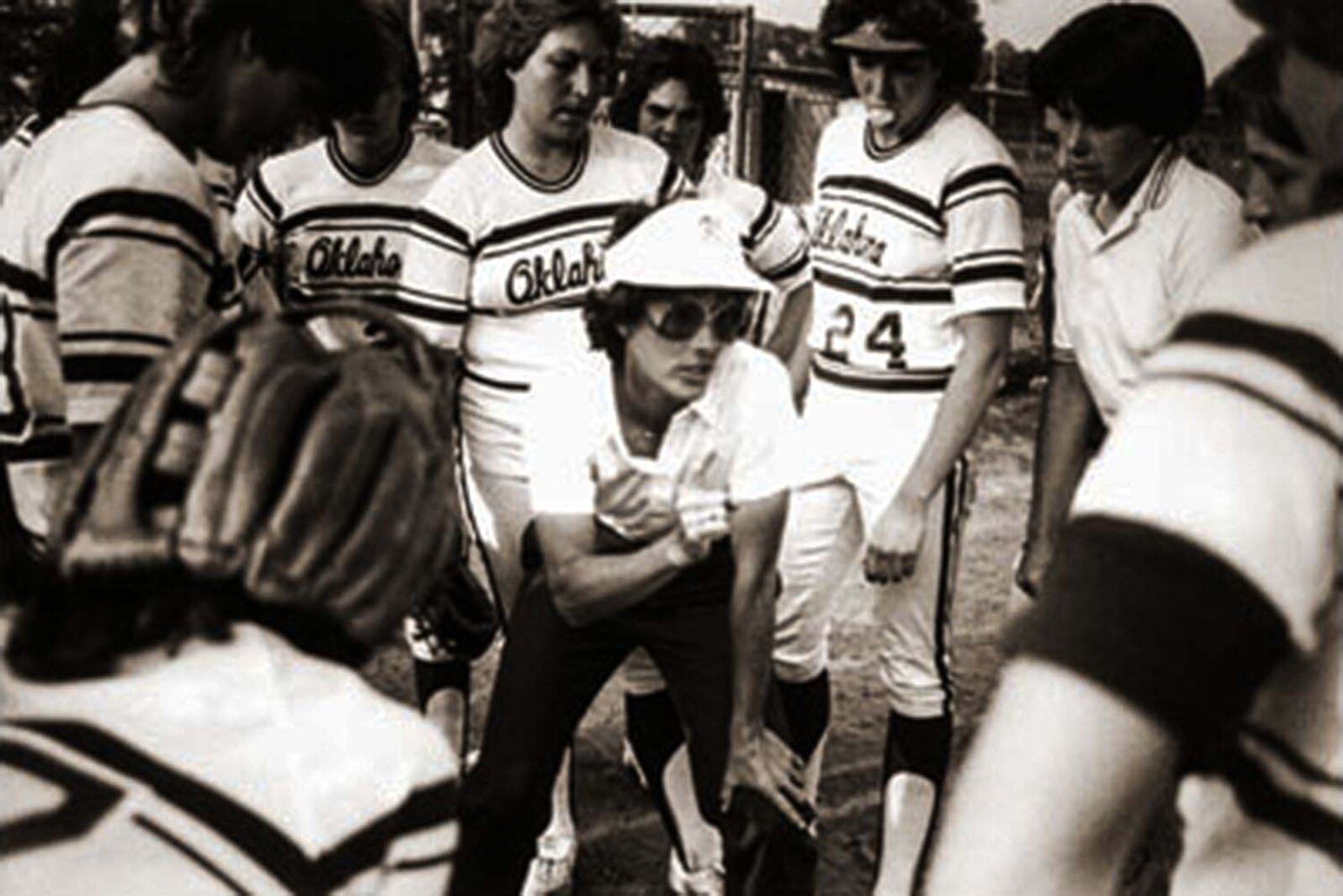
When Hynes left Putnam City High School in Oklahoma City to become OU’s first women’s NCAA-level athletics coach for softball and field hockey in 1977, she took a big pay cut. “I did a little bit of everything just so I could still have a bite to eat,” she says. That included keeping score for softball games at Norman’s city parks.
Nationwide, women’s sports were marginalized or flat-out ignored during their early NCAA era, Hynes recalls.
But she never thought about leaving OU because she valued a job at a major program. “People didn’t care too much about softball back in the late ‘70s, ‘80s,” Hynes says. “I had a lot of freedom to do things.” She worked a deal with Rawlings to get free gloves for her players and arranged for the team to play tournaments in California and Las Vegas.
The softball team’s budget was $1,200 when Hynes started, but when OU decided to provide full scholarships, it jumped to $35,000. Things improved daily, she says. “It was just an exciting time.” Sometimes too exciting. Hynes successfully lobbied for chartered buses instead of trekking to games in stuffed passenger vans after one caught fire in the middle of Arizona.
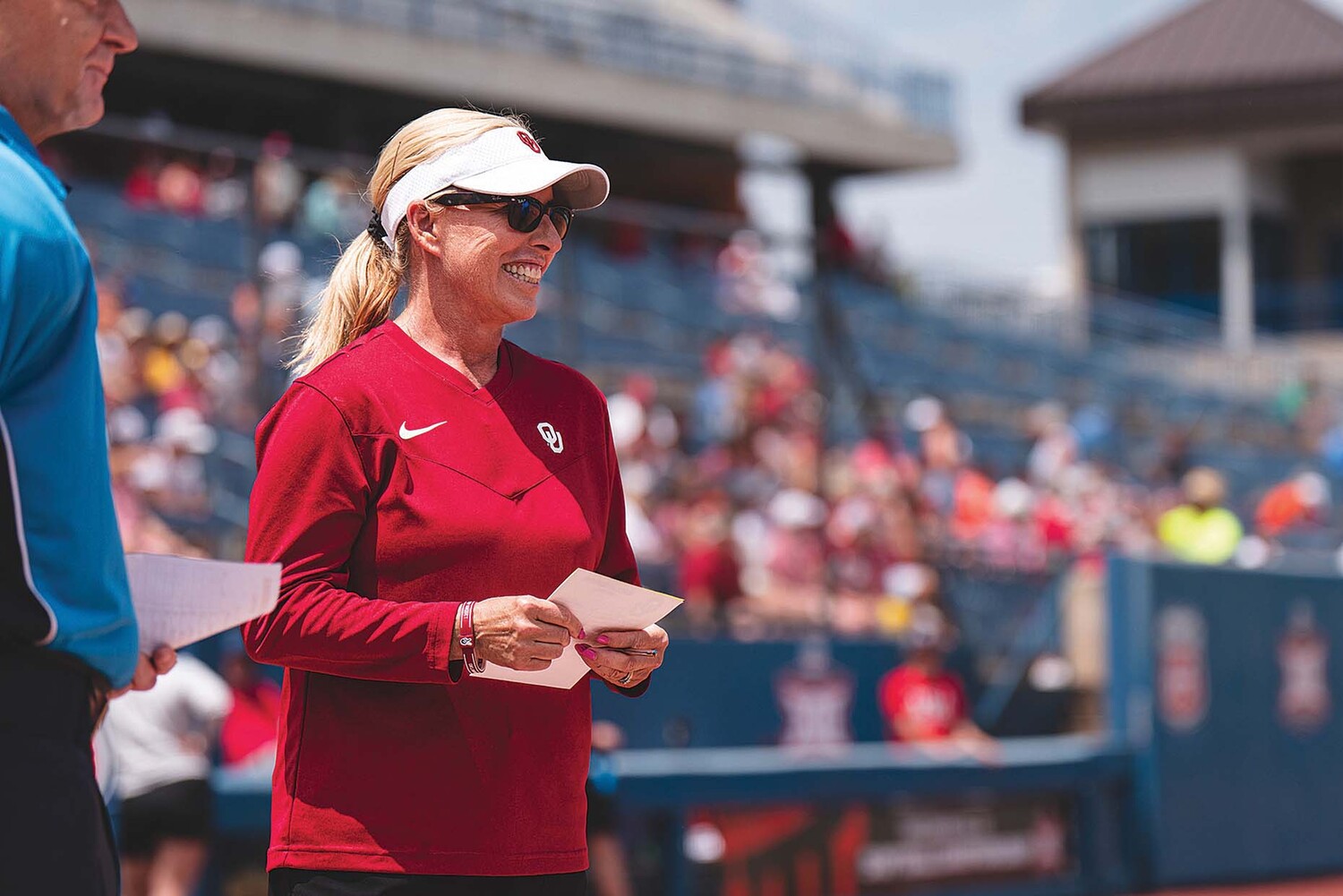
In 1984, after hosting three Association for Intercollegiate Athletics for Women national softball championships, Hynes was named coordinator of promotions for the OU Department of Athletics. She became associate athletics director in 1995, just in time to serve as the ultimate ally for two future icons.
Patty Gasso knew more about OU football than its softball team before coming to Norman. What she learned did not inspire confidence. The pay was worse than when she’d coached at California’s Long Beach City College. So were the facilities. She had no family or friends in Norman—and she was pregnant. “Nothing made sense for the move,” says Gasso, who took over as OU’s head softball coach in 1995. “Nothing.” But no D-1 school in California was going to hire a JUCO coach.
Sherri Coale was named OU’s women’s basketball coach the following year. She was recruited from a nine-year post at Norman High School, where the 31-year-old had led the team to two state 6A championships. It seemed like a swell “local resident makes good” story.
“I got some of the worst letters in the world,” Hynes says of Coale’s 1996 hiring. “I got letters saying, ‘What are you trying to do, drop this program again?’ ” The skills that define college coaches—convincing mom and dad that you can take care of their kid, establishing a nationwide network of allies—didn’t concern Coale at first. She focused on the game. That’s what she knew. That was her comfort. She learned the rest along the way.
At OU, Coale and Gasso had a priceless asset: freedom. There were no overwhelming expectations, no outside demands. And they had help.
One of Hynes’ greatest assets, Coale says, was that she kept women’s sports “at the forefront of the conversation” with university decision-makers for years.
“Over time, people softened to the idea and then they got excited about the idea and then they championed the idea,” she adds.

Hynes was tournament director of the Women’s College World Series and worked with the Big 12 softball tournament. But if you drove past OU’s softball stadium, you might have seen Hynes, a leaf blower strapped to her back, clearing the sidewalks.
“That encapsulates what she was as my boss: She was arm-in-arm and running point out there just trying to clear a path so that we could recruit and coach kids, because that was our job,” Coale says. “There were so many things that needed to be done, and so she did as many jobs as she was capable of so we could focus on the things that only we could do.”
Hynes was the first person to greet Gasso’s newborn son, DJ, at the hospital after she had worked every contact to locate the soon-to-be family during a snowstorm. Gasso was awed by her—the ‘I’ll-sleep-when-I’m-dead’ work ethic, the charisma that glowed in a pool hall full of back-slappers or in a ladies’ golf foursome. The field Gasso’s team played on was named for Hynes. But Hynes had no use for followers.
“I knew I just had to figure it out and not call Marita every time I had a problem,” Gasso says. “What I wanted to do was make Marita proud. The best way I could do that was make her not have to worry about me.”
Meanwhile, Coale was relying on the “gradual building” of little actions, or “continued acts of sincerity.” Her players faithfully attended classes, showed up in the community, battled on the court. Thanks to Hynes’ hustle and the allure created by champion UConn women’s hoops, Sooners women’s basketball attracted 10,713 attendees at a December 1999 game, then the largest crowd ever to watch a women’s basketball game in Oklahoma.
“That felt, like, ‘Boom, here we go,’ ” Coale says. The team reached the NCAA Tournament’s Sweet 16 that season. They beat Purdue, the defending champions, along the way.
By 1999, Gasso had not found success. She had a massive workload and her husband, Jim, moved back to California to supplement her salary. The coming year would be make-or-break. Then, the Sooners made the 2000 Women’s College World Series. In the emotional furnace of the postseason, Gasso drew on her team to coach fearlessly and keep control so eagerness didn’t disrupt momentum.
The Sooners won the NCAA women’s softball national championship.
“Then, everything changed,” Gasso says. “The pay changed. The attention changed. The facilities were changing.”
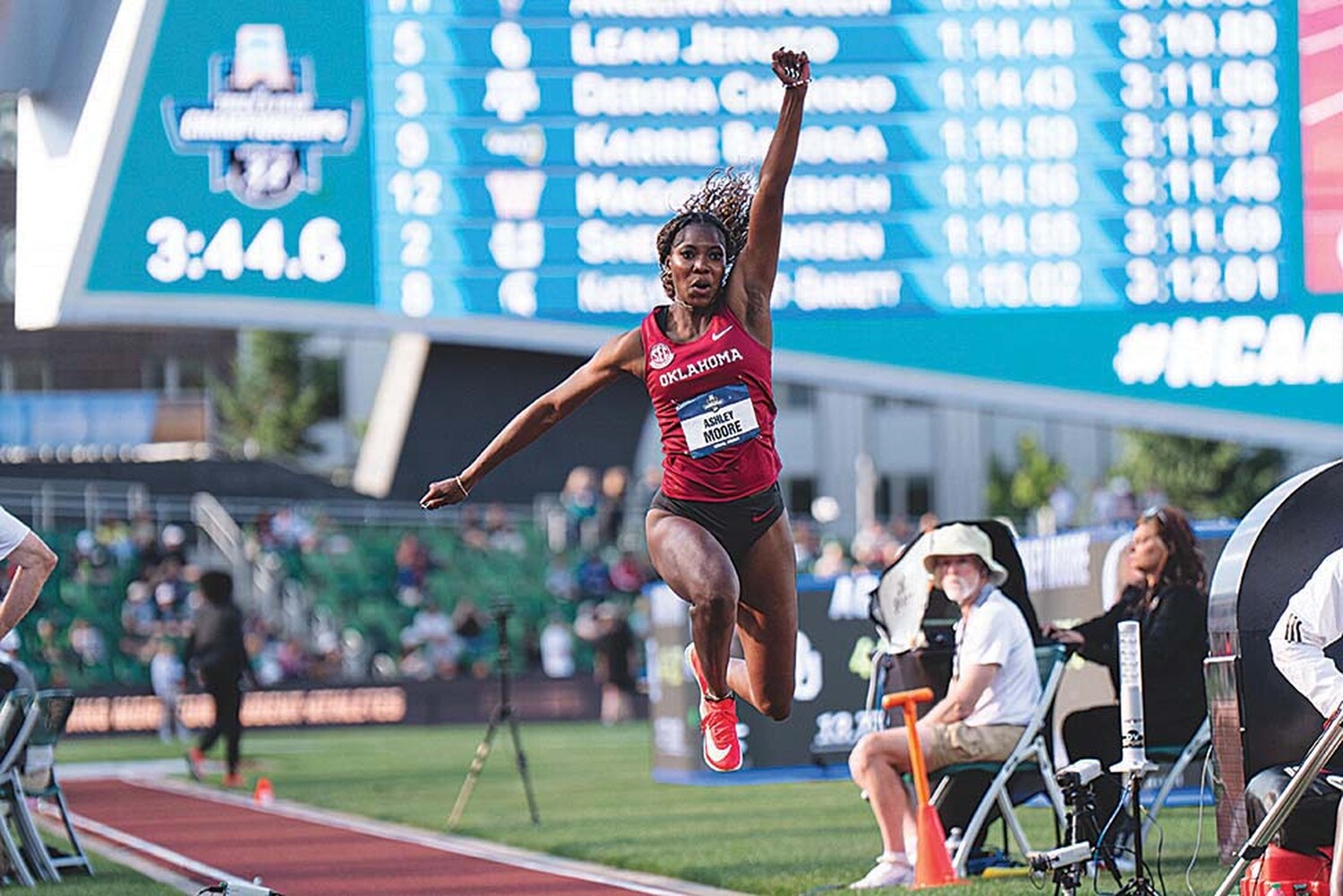
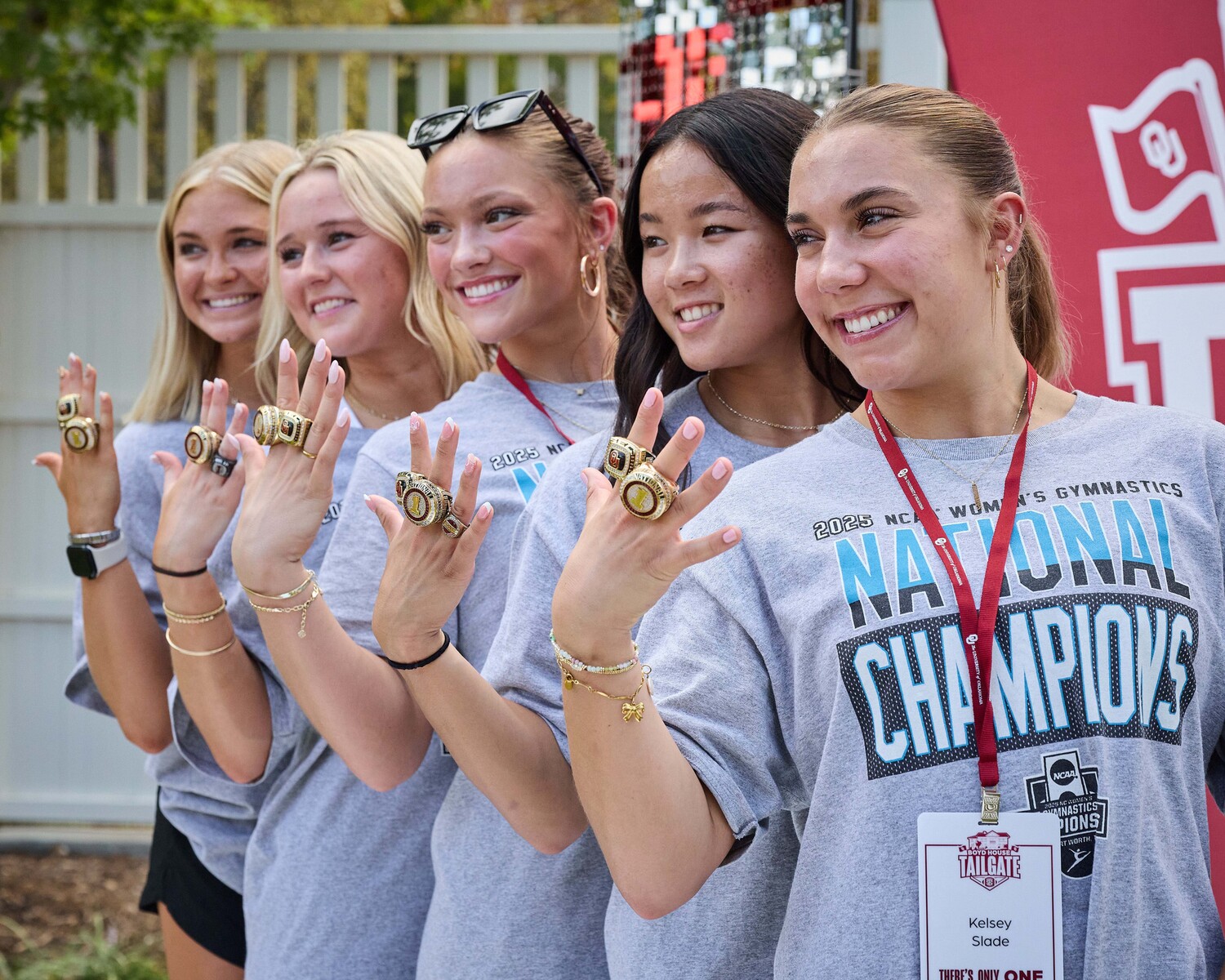
Winning has remained a constant at OU. Gasso’s teams have won seven more national championships since 2000. The women’s gymnastics team, under head coach K.J. Kindler, has brought home seven national championships since 2014, including three in the last four years.
Coale led the Sooners to the NCAA Women’s Final Four twice before stepping down in 2021. Hynes retired from her role as assistant athletics director in 2003, but her passion for OU women’s athletics has not dimmed. “It is my life,” she says. “You know how hard it was in the beginning, but it was so rewarding by the time we finished.”
Gasso is now in the position Hynes occupied as venerated elder. “I’m kind of fearing the ending because it’s sooner than later,” she admits, noting that Oklahomans have joined the rest of the country in becoming fascinated with women’s athletics. OU is stoking that passion. “The university and our supporters have made monumental investments in all of our women’s sports,” Gasso says.
One of those investments is Love’s Field, home to OU’s softball team.
The stadium, which opened in March 2024, was made possible by a $12 million matching gift from Love’s Travel Stops—the most significant philanthropic gift devoted to women’s sports in OU history. The stadium seats 4,200 and is the largest on-campus softball facility in the nation. Among its many impressive features, Love’s Field has a 10,669-square-foot indoor practice facility. A field under the stands warmed by burning barrels is now an increasingly misty memory.
But what matters most to Hynes and those who remember bundling up for batting practice five decades ago is that no one is telling players to leave early or to wait their turn.
OU’s women athletes are here to stay.
Pete Croatto is a freelance writer living in central New York.
To comment on this story, click here.