


alt-2.jpg?w=1100)
Roger Denny is Ready
Taking a job only 11 have held before, OU's new athletics director is leading the Sooners in a fast-changing sports world.
Three letters—NIL—have rattled college athletics in recent years. Not Roger Denny. “I’ve been writing the words, ‘name, image and likeness’ on license agreements for two decades,” he says.
And he has zero hesitation about leading an exemplary college athletics program.
In February, Denny became the University of Oklahoma’s new vice president for intercollegiate athletics programs and only its 12th director of athletics. He follows in oversized footprints set for 28 years by the legendary Joe Castiglione.

Denny, late of the University of Illinois, knows parallels exist between where he is now and his professional past. As a lawyer, he absorbed the business side of college athletics. But he learned long ago that you cannot wind back the clock for a client. That lesson is applicable in his second career in athletics administration. “The scoreboard says what it says at the end,” Denny explains. “We don’t get to call a do-over.”
Is that a lot of pressure?
No, Denny says. Winning championships is why everyone is here. Following the legacy of OU coaches past and present, the ones known by their last names—Gasso, Switzer, Kindler—who give OU Athletics that perpetual gleam, “comes with a lot of gratitude.”

OU wasn’t the result of some grand career strategy, Denny says. After 15 years as a lawyer—including as a partner at Spencer Fane LLP in St. Louis, where he collaborated with college athletics departments and sports businesses—he simply wanted to work at the University of Illinois.
“I never set out to chase a job,” Denny, 43, says. He excelled for five years as the deputy director of athletics at Illinois, a multi-faceted position in the non-stop whirl of big-time college sports. Overseeing all business strategy and department operations, he helped to secure a $100 million gift, the college’s largest ever. He also headed the school’s NIL strategy, expanding opportunities for its student-athletes.
Denny was also the sport administrator for Illinois’ football program. His last two seasons, the team won 19 games. In his four years there, season ticket sales and average attendance at Fighting Illini games ranked among the nation’s best.
He was surprised when OU requested an interview last fall—and impressed. “The university was taking a different approach in searching for a new AD, not going by the same lists that a lot of people around the industry use,” Denny says.

The approach worked.
“We have the next natural leader who understands both the complexity of the moment and the opportunities it presents,” OU President Joseph Harroz, Jr. said at Denny’s introductory press conference, adding that he “will advance the bold vision needed for OU to continue leading in a highly dynamic environment.”
Throughout a four-month courtship with OU Athletics, Denny saw the university’s hunger to reach the next level. It wasn’t just coming from President Harroz or Randall Stephenson, chair and special adviser to the president for OU Athletics. Denny saw the same from legends of the school’s championship past—Sam Bradford, Sherri Coale, Bob Stoops—who spent their well-earned free time with him. With every handshake and conversation, “the job got more exciting,” Denny recalls. “And that’s exactly the way you want it to be.”
Now that he’s at OU, Denny is inclined to give his staff space. “Letting folks operate within their expertise and be decision-makers in their subject areas is going to be really important.”
Castiglione’s new role as athletics director emeritus and his nearly three decades of experience also ensure continuity and “that we’re not changing things for the sake of change,” Denny adds.
Stability matters. Denny believes college athletics will continue to see “really rapid change” within intellectual property rights—which includes NIL. His experience more than qualifies him for the new age of student-athletes, one that experts believe might head toward collective bargaining agreements. He has been on both sides as an attorney and AD.
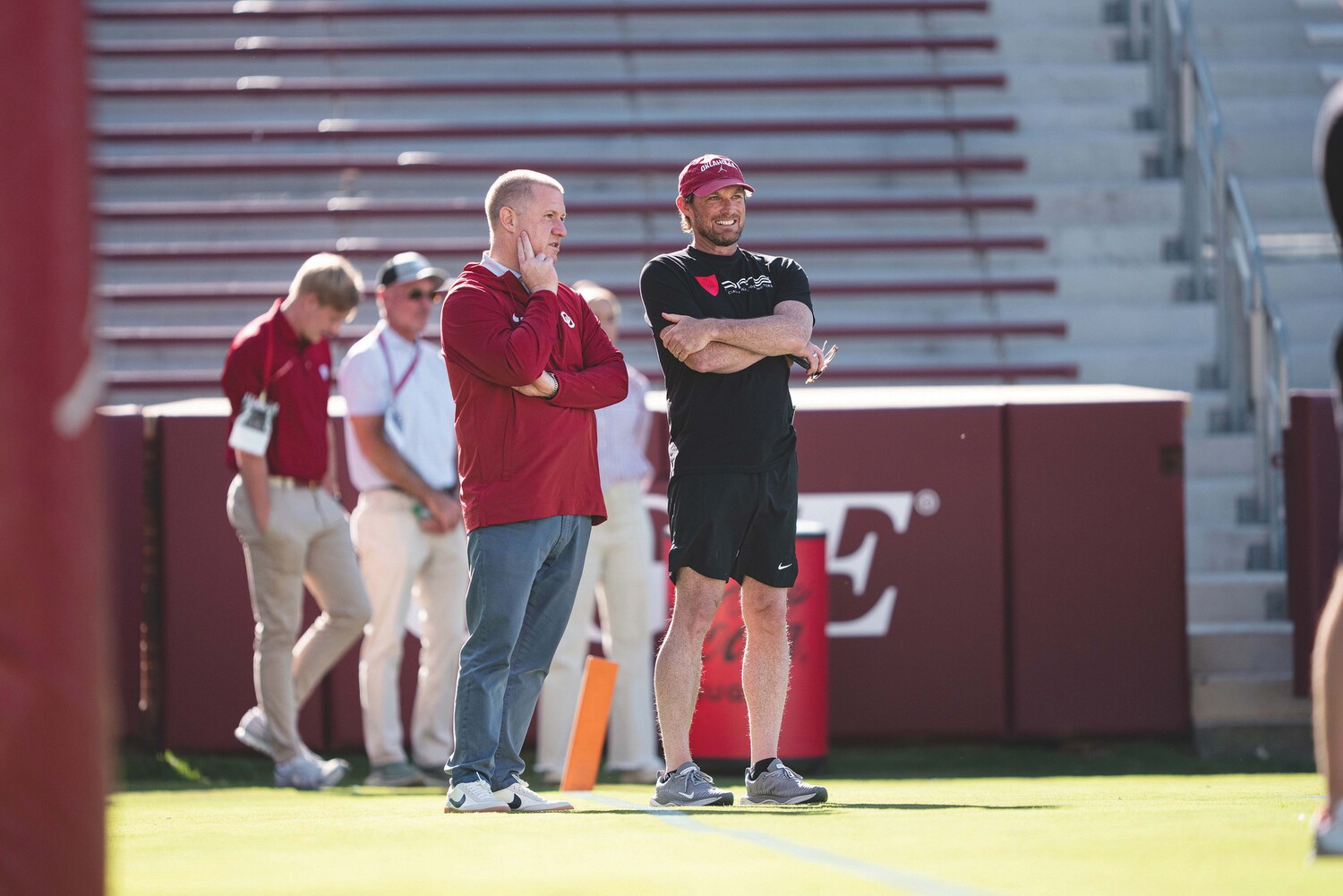
The new age of student-athletes also is prompting creative thinking around assets and revenue. Denny expressed optimism about OU’s Rock Creek Entertainment District, a forthcoming $1.2 billion development that will include an arena for gymnastics and basketball, restaurants, retail, housing and a hotel.
-2.jpg?w=1100)
“If you look at the arena project, that’s a good example of us getting out ahead of where the market is going,” he says. “That’s leveraging hospitality and mixed-use around sports-anchored real estate.”
Denny stresses that Illinois and OU are not rungs on a professional ladder (if goodwill is any indicator, several of his old Illinois colleagues made the trip west for Denny’s press conference). He does not subscribe to the “climb-to-the-top” philosophy outlined in best sellers that populate CEOs’ office bookshelves.
“The idea that you can kind of ‘architect out’ what your career is going to look like, I think, is a total fallacy,” says Denny, sporting a Sooner-crimson tie. “Show up, do great work, care for people and the world’s going to take you to really incredible places.”
In one of his first weeks in Norman, Denny spent time with donors and fans. The buzz he felt during the months of job interviews intensified. OU, he realized, could exceed its already dizzying history. This wasn’t business as usual.
“And that,” says the man leading the way to OU’s next chapter in athletics, “is really exciting.”
125 Years of Sooner Leadership

Roger Denny joins only 11 individuals who have headed OU athletics programs, which include Sooner greats like Steve Owens and Vernon L. Parrington—who brought football to Norman and later won the Pulitzer Prize in History.
Vernon L. Parrington (1901–1908)
Bennie Owen (1908–1934)
Lawrence "Biff" Jones (1935–1936)
Tom Stidham (1937–1940)
Lawrence Haskell (1941–1947)
Bud Wilkinson (1947–1964)
Gomer Jones (1964–1971)
Wade Walker (1971–1986)
Donnie Duncan (1986–1996)
Steve Owens (1996–1998)
Joe Castiglione (1998–2026)
Roger Denny (Feb. 15, 2026 – Present)
Pete Croatto is a freelance writer living in central New York.
To comment on this story, click here.