



Practice With a Purpose
Over five decades, OU Law's Legal Clinics have balanced real-world experience with resources for low-income Oklahomans.
Long before they go on to work in firms, University of Oklahoma College of Law students are learning what it means to practice in quieter spaces: small conference rooms, early-morning phone calls with anxious clients, and late-night research sessions fueled by coffee and deadlines.
Between attending classes and preparing for job interviews, they are prepping arguments, reviewing evidence and trying to anticipate what will happen when they finally step into the courtroom. OU Law students are learning how to balance the competing responsibilities of coursework, professional expectations and the weight of representing people whose legal challenges don’t pause for exams or semester breaks.
For students participating in the OU Legal Clinics, this work is not theoretical. It is real.
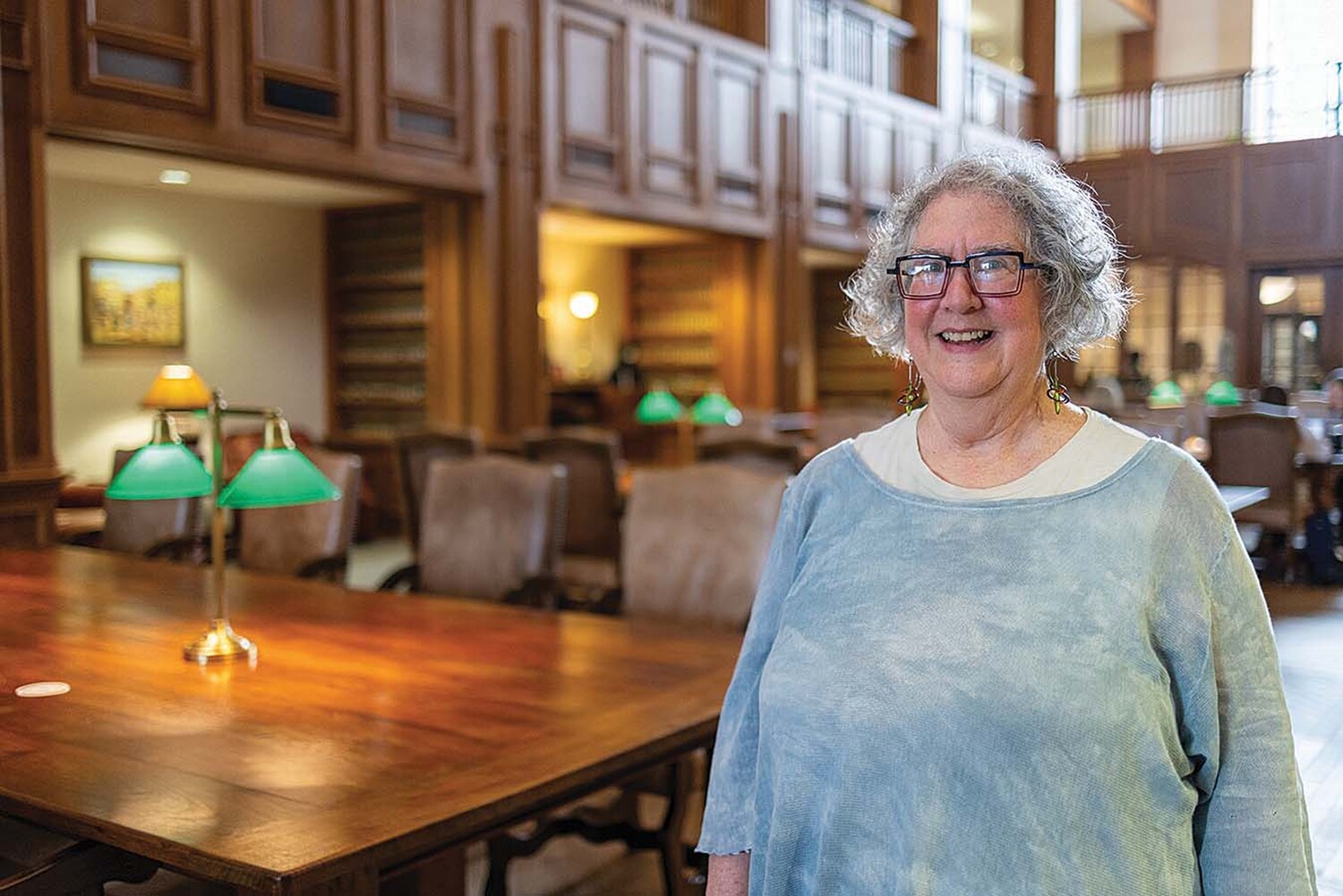
“The clinics are where we help students blossom and realize what they can do,” says director Amy Pepper, a 1987 OU Law alumna who oversees the civil division of the clinics.
Founded in the early 1970s to serve low-income residents in Cleveland and McClain counties, OU Legal Clinics have evolved into one of the law school’s most immersive educational experiences. Today, students in civil and criminal clinics represent real clients pro-bono under the supervision of experienced faculty attorneys.
From the moment a case is assigned, students take the lead. They conduct intake interviews, draft pleadings, negotiate with opposing counsel and, when necessary, present arguments in court. Faculty members review their work and guide their decisions, but the responsibility ultimately belongs to students.
“Adults learn better by doing than by just listening,” Pepper says. “Students are the ‘first chair’ on the case. They’re the attorney.”
Rather than waiting until graduation to confront the realities of legal practice, OU Legal Clinics students encounter those realities early with a safety net in place. Third-year OU Law student Claire Grace describes the experience as practicing law “with training wheels.”
“I always tell people it’s like I have my driver’s permit in legal licenses,” says the Stillwater, Okla., native. “I can do everything, but I have supervision. It’s really beneficial to have that experience while you’re still learning.”

For many students, clinic participation is when abstract legal concepts begin to make sense in practical terms. In traditional classroom settings, students cover statutes, precedent and legal theory. In the clinic, they must translate that knowledge into action and communicate clearly with clients, meet court deadlines and make strategic decisions in real time.
“It was like the ‘algebra’ clicked into place,” Pepper recalls of her own experience as an OU Legal Clinics student in the 1980s. “I finally understood why we were learning what we were learning in classes. That’s also what tends to happen with our students.”

Students often juggle multiple cases simultaneously, prioritizing tasks and collaborating with supervising faculty. They also develop professional judgment, understanding when to advocate aggressively and when to seek compromise.
Perhaps most important, they begin understanding who they might become.
“It’s a really great way to start forming your professional identity,” Grace says. “You determine the type of attorney you want to be, how you want to treat people and how much effort you are willing to put into helping them.”
While OU Legal Clinics strengthen students’ technical skills, they also expose students to the emotional realities of legal work.
Clients qualify economically for the clinics’ free services. But with qualification come challenges that could extend beyond the courtroom, whether housing insecurity, addiction, family instability or limited access to financial resources. Success is not always measured in wins and losses.
“It’s about what’s the actual best resolution for the client, which can encompass treatment, helping them obtain mental health assistance or helping them get connected to resources,” says Rebekah Taylor, an associate professor of clinical legal education and 2007 OU Law graduate who oversees the criminal division of the clinics. “It’s not just going to court and making an argument before the judge. It’s realizing that when you’re working with real people, there are a lot of moving parts.”
Taylor says working in the clinics requires students to think in a different way.
“A lot of people come to law school without being personally familiar with the impacts of poverty,” Taylor says. “It’s a great opportunity for students to not just look at how to apply the law but also look at everyone as a person and understand what help some people need—sometimes, it’s to get sober, get their kids back or get on their feet and have a place to live so that they can fulfill probation requirements.”
Students quickly learn that legal outcomes are often intertwined with broader life circumstances. A missed appointment might not reflect indifference, but rather competing crises such as keeping utilities connected, securing transportation or caring for children.
“This is their life,” Grace says. “At the end of the day, we go home; it’s our career. For them, it’s everything.”
A former client used the clinic’s legal services to work out child custody and visitation rights, which were difficult to manage without legal documents.
“I felt that we got the best possible outcome and I’m very happy with where we get to be today because of it,” the client says. “The livelihood I have now has a lot to do with the care the OU Legal Clinics took in my case.”

Faculty members emphasize empathy alongside professionalism, encouraging students to acknowledge difficult emotions while maintaining appropriate boundaries. After particularly challenging cases, it is not uncommon for supervisors and students to gather informally to debrief and reflect on what they have experienced.
The goal, Taylor says, is not simply to prepare students to perform effectively in court, but to help them develop resilience and compassion that will sustain them throughout their careers.
The effects of OU Legal Clinics participation often extend well past graduation. Alumni who once handled their first client interviews in Norman now serve as prosecutors, public defenders and private attorneys across Oklahoma and beyond. Some return to campus career fairs seeking to recruit the next generation of clinic-trained graduates.
Service experience is a component of students’ appeal to potential employers.
“Not only are we giving the students an amazing educational opportunity, we’re also showing that OU cares about people in this community,” Taylor adds. “We’re giving back through the clinic.”
Pepper and Taylor envision expanding experiential opportunities to reach more OU Law students and communities. They believe additional clinics focused on areas such as housing and appellate advocacy could further strengthen both legal education and public service efforts.
Such growth would not only enhance student learning but also contribute to a stronger justice system, Pepper says, shaped by attorneys who enter the profession with practical experience, empathy and a deeper understanding of the communities they serve.
OU Law students are already building that future, one case at a time.
Rebecca Najera is a strategic communications specialist at the OU Foundation.
To comment on this story, click here.